

Living on the Oregon Coast means dealing with salt air, steady rain, and hills that put real work into your brakes. If you drive a Toyota in Warrenton, your brake system faces conditions that inland drivers rarely deal with. Toyota brake service in Warrenton, OR needs to account for more than just mileage. It has to account for the coast itself. Our team at Lum's Toyota has serviced vehicles along this stretch of coastline since 1969, and we've built our approach around what actually wears brakes out here. If you're noticing a noise, feeling a soft pedal, or just want peace of mind before a long drive, our service center is ready to take a look.
Why Coastal Weather and Hilly Roads Take a Toll on Your Toyota's Brakes
Warrenton's climate isn't subtle about its moisture. Annual precipitation in the area typically runs somewhere between 39 and 75 inches, and humidity often sits above 80 percent, peaking near 84 percent in August. Whatever number you look at, the pattern holds: Warrenton stays damp most of the year.
That matters because brake fluid is hygroscopic, meaning it naturally absorbs moisture from the air over time. In a humid coastal climate, this happens faster than it would in a hot, dry region. Once enough moisture gets into the fluid, it can cause internal corrosion and rust flakes that circulate through the brake lines, damaging calipers and other components along the way. This is one reason Toyota recommends changing brake fluid roughly every two years or 20,000 miles, though your actual interval can shift depending on how much driving you do in wet conditions.
Salt air adds another layer of wear on top of that, working on rotors and calipers faster than inland driving ever would. Highway 101's steep grades between Warrenton and neighboring towns mean sustained downhill braking, and that builds up more heat than your brakes would ever see on flat ground. When friction heat outpaces what the system can dissipate, you get brake fade, a temporary loss of stopping power that's more likely when pads or rotors are already worn. Add in stop-and-go tourist traffic near Astoria and Seaside during peak season, and you've got a recipe for brakes that wear out faster than the owner's manual might suggest. Warrenton Toyota service isn't just routine maintenance here. It's maintenance shaped by a specific coastal environment.
Warning Signs Your Toyota Needs Brake Service
Your Toyota tells you when something's off, if you know what to listen and feel for.
Squealing, Grinding, and Vibration
A squeal or squeak is often your pads doing exactly what they're designed to do: alerting you early. Genuine Toyota brake pads include a built-in metal wear indicator that creates that sound once the pad material gets thin. Grinding is a different story. That sound usually means metal is contacting metal, and it needs attention right away. Vibration or pulsation you feel in the pedal, steering wheel, or throughout the vehicle while braking often points to rotors that need resurfacing, though it can also signal a loose component worth checking.
Soft or Spongy Brake Pedal Feel
If the pedal sinks lower than usual or feels soft under your foot, air, moisture, or contamination may have worked its way into the brake lines. This ties directly back to the moisture issue mentioned above, and it's not something to wait out. A spongy pedal means reduced control right when you need it most.
Dashboard Brake Warning Lights
Not all warning lights carry the same urgency. A yellow icon indicates an item of importance but is not necessarily an urgent warning, while a red icon indicates a condition that requires immediate attention. An ABS light specifically points to a malfunction in the Anti-lock Braking System or Brake Assist, and it's worth having a dealer inspection rather than guessing at the cause.
Complete Toyota Brake Repair Services in Warrenton
Once you've spotted a warning sign, or if it's simply been a while since your last inspection, here's what our service department covers.
| Service | What's Included | Recommended Interval | Signs You Need It |
|---|---|---|---|
| Pad Replacement | Genuine Toyota pads with embedded wear indicators | Roughly 30,000–70,000 miles, varies with driving | Squealing or grinding sounds |
| Rotor Resurfacing/Replacement | Machining rotor surface smooth, or replacing with Toyota-engineered rotors | As needed, based on inspection | Vibration or pulsation while braking |
| Brake Fluid Flush | Boiling point test and full fluid replacement | Every 2 years or 20,000 miles | Soft/spongy pedal, dark or cloudy fluid |
| Full Inspection | Pads, rotors, fluid, calipers, and lines checked | Every maintenance visit | Any warning sign or dashboard light |
Brake Pad Replacement
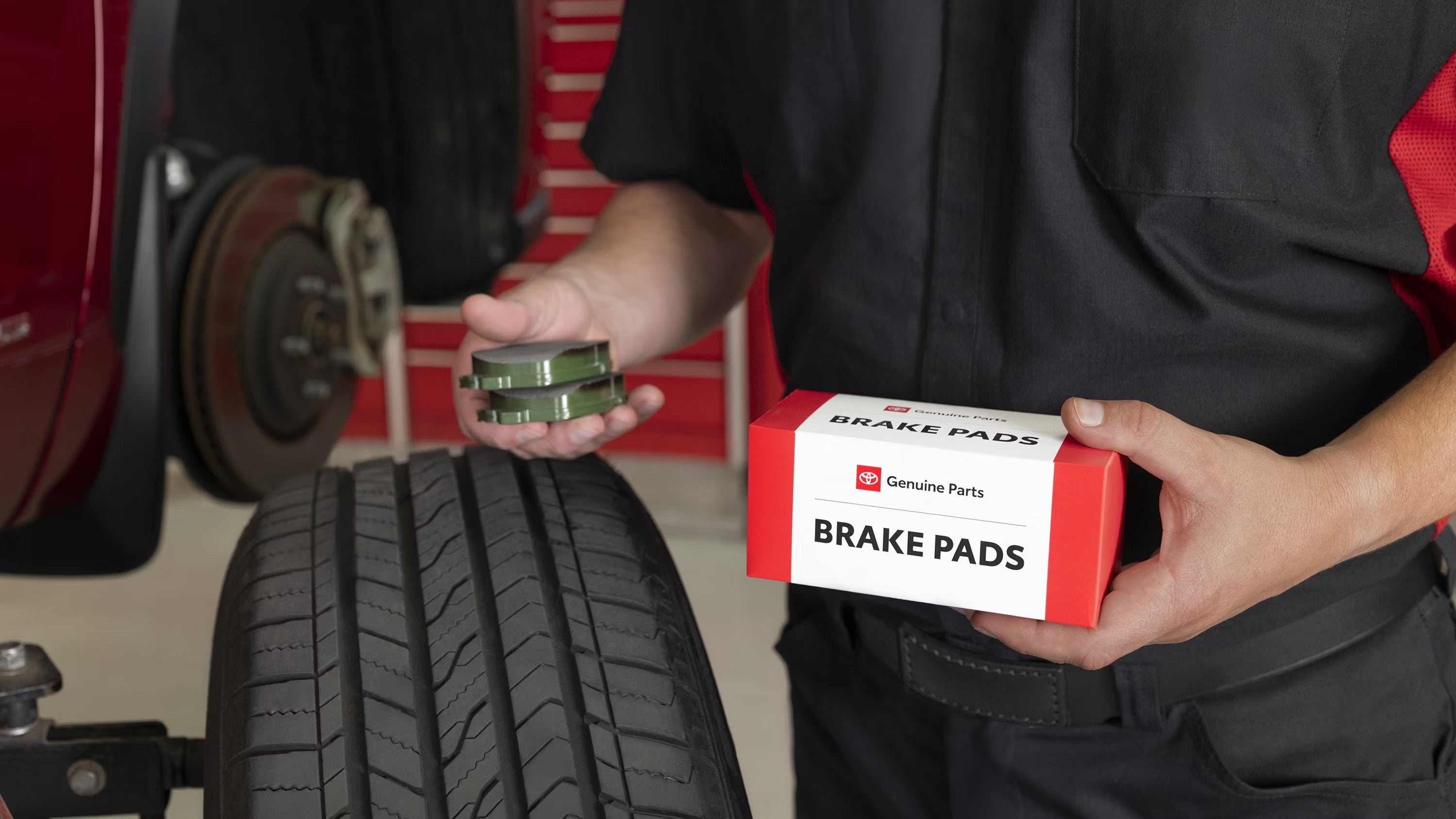
Pad life varies quite a bit depending on driving habits and terrain, generally falling somewhere between 30,000 and 70,000 miles. Given the coastal grades and tourist traffic around Warrenton, many drivers here land on the earlier end of that range. We replace worn pads with genuine Toyota pads built with the same embedded wear indicators as the originals.
Rotor Resurfacing and Replacement
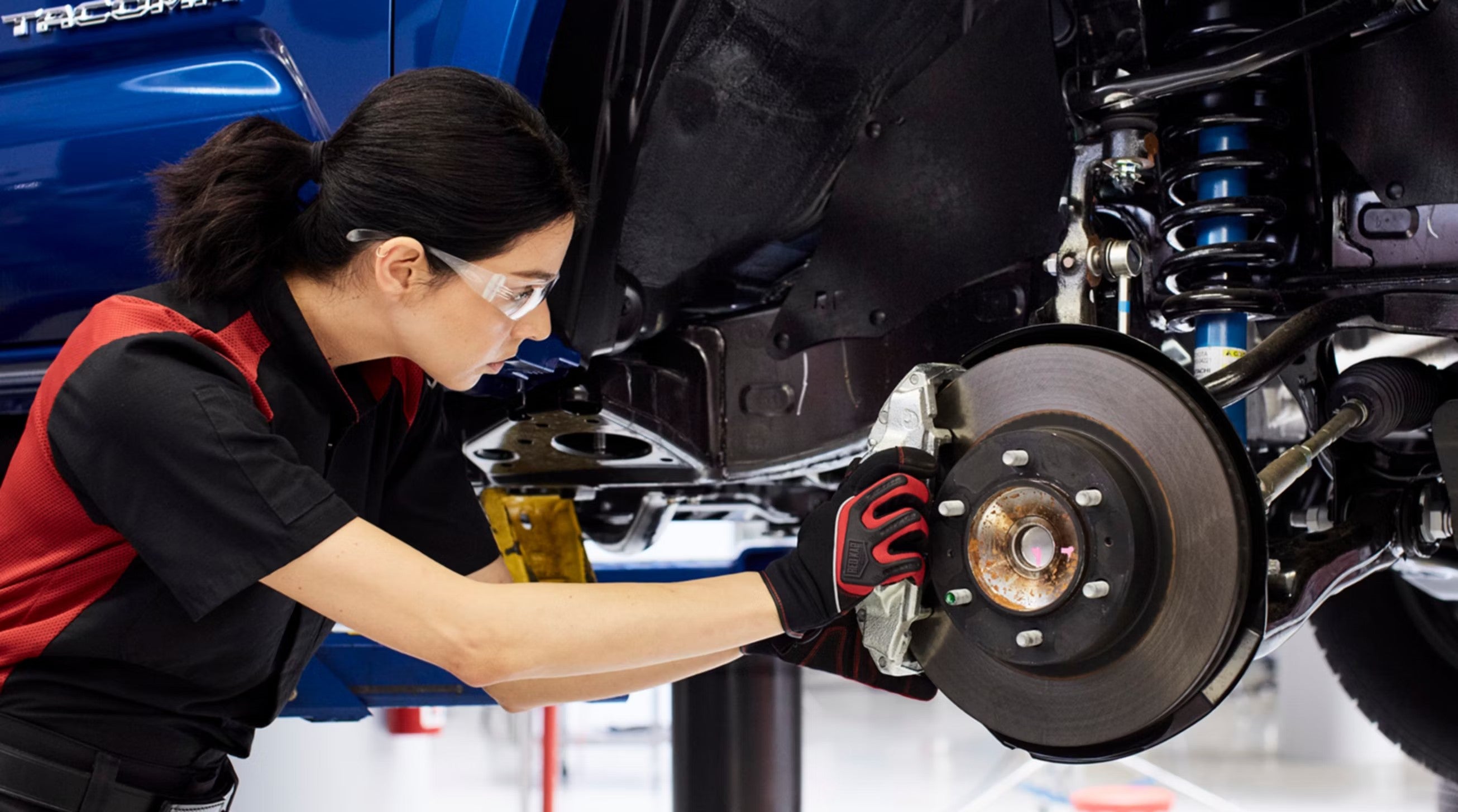
Rotor resurfacing means machining the rotor's surface smooth again to correct minor warping or unevenness, which lets you get more miles out of the original rotor instead of replacing it outright. When rotors are too thin or damaged to resurface safely, we replace them with Toyota-engineered components built to original specifications.
Brake Fluid Inspection and Flush
During service, we test the fluid's boiling point with a fluid tester and check its appearance. Fresh fluid runs clear to light yellow; dark or cloudy fluid signals contamination and moisture buildup. A flush removes that compromised fluid and replaces it, protecting the rest of the brake system from corrosion.
Why Genuine OEM Toyota Parts Matter
OEM stands for Original Equipment Manufacturer, and it matters because these parts are engineered by Toyota to match your vehicle's original specifications exactly. That includes wear indicators, precise fit, and materials matched to your specific model. Generic aftermarket parts vary widely in quality and fit, and that gap shows up over time.
If you're dealing with any of these warning signs, don't wait. Contact our service team or schedule your brake inspection online, whichever's easier for you.
The Lum's Toyota Brake Service Advantage
Factory-Trained Technicians
Our technicians go through Toyota's T-TEN program, short for Toyota Technician Training & Education Network. It's a five-tiered certification built on ASE fundamentals, combined with an associate's degree track and Toyota- and Lexus-specific coursework. That's a different level of training than what you'd find at a general repair shop, and it shows in how accurately problems get diagnosed the first time.
Toyota-Specific Diagnostic Equipment
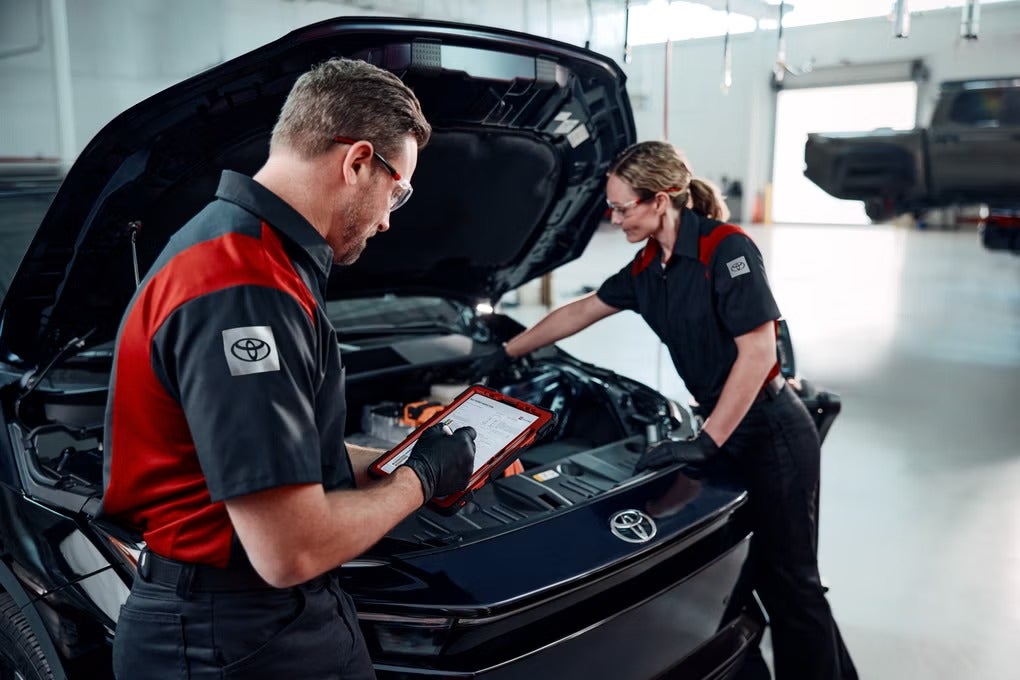
We use Toyota-specific diagnostic tools and have access to Toyota Technical Service Bulletins, which help us pinpoint issues with precision, generally leading to faster, more accurate repairs.
Save on Brake Service with Current Coupons and Specials
Brake service is one of those things that's easy to keep pushing back on the calendar. We keep current service and parts specials available for customers, covering a range of maintenance needs including brake work. Stop by or check online before your appointment, since offers change and there may be something that applies to your visit.
Schedule Your Toyota Brake Inspection in Warrenton Today
What to Expect at Your Visit
Booking a brake inspection with us is straightforward. Schedule online, give our service department a call, or stop by in person at 1605 SE Ensign Lane in Warrenton. Once you arrive, we'll check your vehicle in, take a look at the brake components, and walk you through what we find before any work starts. Most inspections don't take long, and we'll let you know upfront what to expect for timing based on what your Toyota needs.
Hours and Contact
We're open Monday through Friday from 9 a.m. to 7 p.m., Saturdays from 9 a.m. to 6 p.m., and Sundays from 11 a.m. to 6 p.m. for sales, with service and parts available Monday through Friday 8 a.m. to 5 p.m. and Saturday 8 a.m. to 4 p.m. You can also reach us directly at 503-861-1144. Whether it's a quick pad check or a full brake system inspection, our team is here to help keep your Toyota safe on these coastal roads.
Toyota Brake Service FAQs
How often should I get brake service on the Oregon Coast? Because of the humidity and salt air here, we recommend more frequent brake fluid checks than you might need inland, generally aligning with Toyota's two-year or 20,000-mile fluid guideline, alongside routine pad and rotor inspections at each maintenance visit.
Should I use aftermarket brake pads instead of genuine parts? Aftermarket pads can vary widely in quality and often lack the wear indicators built into genuine Toyota pads. We recommend Toyota-engineered components to keep performance consistent with your vehicle's original design.
What does a full brake inspection include? We check pad thickness, rotor condition, brake fluid quality and boiling point, and the overall function of components like calipers and lines, looking for anything that could affect stopping performance.
How long does brake service typically take? It depends on what your vehicle needs. A straightforward pad replacement is often quicker than a full fluid flush combined with rotor work. We'll give you a clear timeframe once we've inspected your Toyota.
Our service team at Lum's Toyota works from genuine parts, factory training, and years of experience with coastal driving conditions, whatever your Toyota needs. That's the service Warrenton drivers have relied on since 1969. Check our current brake specials and book your inspection online in a couple of minutes.