

Blog / Warrenton Toyota Dealer

Toyota Certified Technicians: Why Training Matters for Service and Repairs

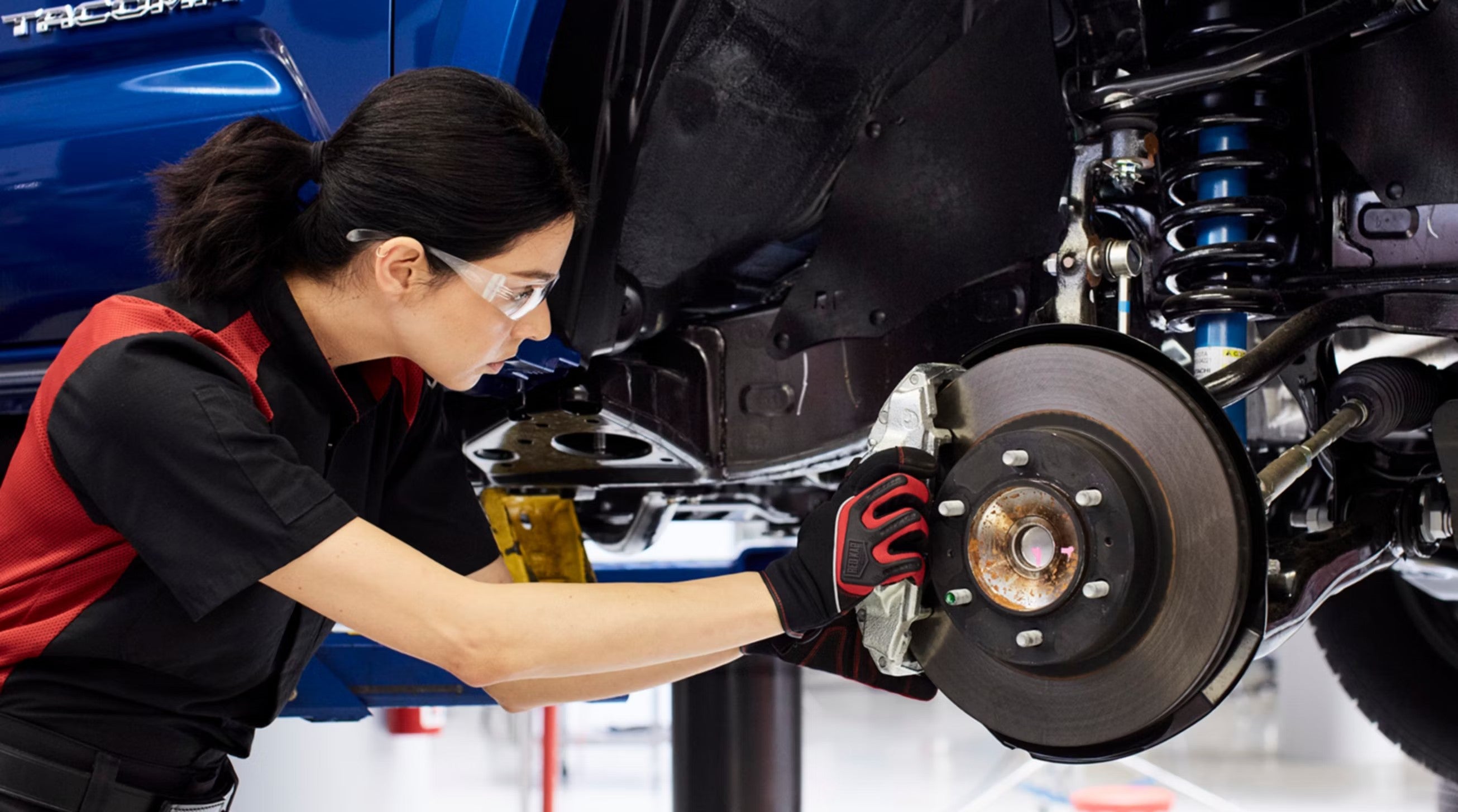
Toyota technician in safety glasses inspecting a brake rotor and caliper on a lifted vehicle

When your Toyota needs work, the person holding the wrench matters just as much as the parts they use. A certified Toyota technician trains specifically around Toyota's engineering, not general automotive theory. That distinction affects how fast a problem gets diagnosed and how long the fix actually holds up. If you're weighing your options for service in Warrenton, OR, schedule a visit with our team and see the difference firsthand.

What Makes a Toyota Technician Truly 'Certified' in Warrenton, OR

Toyota technicians complete a structured, ongoing education process through manufacturer-backed programs, separate from the general licensing any auto mechanic might hold. This training keeps pace with Toyota's evolving lineup: hybrid drivetrains, driver-assist technology, updated electrical architecture. It also builds communication skills, since technicians often need to explain findings to service advisors and customers in plain terms.

Toyota Factory Training and Certification Levels

Toyota's technician development runs through several tiers, each requiring more experience and testing than the last. At the entry point, Maintenance and Certified status requires specific coursework but no minimum tenure. From there, Expert-level certification calls for 24 months of dealership experience along with eight ASE certifications. Master Diagnosis status raises the bar further, requiring 60 months of experience, an L-1 ASE certification, and a score of 80% or higher on Toyota's Master Diagnostic test. At the top sits Master Technician, typically earned after five consecutive years of dealership service, the full ASE Master suite, and hands-on specialization in electrical and hybrid systems software.

Many technicians enter this pipeline through the T-TEN program, short for Toyota Technician Training and Education Network. It's a two-year partnership between community and vocational colleges and Toyota or Lexus dealers, often leading to an associate's degree alongside ASE and Toyota-specific certifications, with paid dealership internships built into the curriculum. T-TEN has also pushed hybrid and EV training down to the postsecondary level, a shift that once required five-year master status to access, including high-voltage safety procedures that protect both technician and vehicle.

How This Differs From General Auto Repair Experience

A general mechanic might be perfectly capable with brakes, oil changes, or suspension work across multiple makes. But Toyota's systems, particularly its hybrid batteries, proprietary software, and safety-sense technology, run on protocols that don't always translate from brand to brand. Certified training focuses narrowly on these systems, which cuts down on guesswork during diagnosis. That's a big part of why a search for an independent Toyota mechanic near me often turns up shops that handle general repairs well but aren't necessarily trained on the specific quirks of a Camry hybrid system or a RAV4's safety sensor calibration.

Certified Technicians vs. Independent Shops: A Side-by-Side Comparison

This is where the practical differences really show up. Independent shops and Toyota specialist garages can absolutely handle routine work well, but the gap widens once you get into diagnostics, parts sourcing, brand-specific systems, and warranty coverage.

Specialized Toyota Diagnostic Tools and Software

Toyota Techstream is the manufacturer's proprietary diagnostic and service software, used for module programming, calibration, configuration, and deep troubleshooting. It gives dealership technicians a level of system access that generic tools can't replicate. Independent shops sometimes use Techstream Lite or aftermarket diagnostic tools from brands like Autel, TOPDON, Launch, or Bosch. These can handle basic code reading, but they typically don't reach the same depth as dealer-grade equipment when it comes to programming modules or calibrating advanced systems.

Genuine OEM Parts vs. Aftermarket Alternatives

Toyota Genuine Parts are manufactured or Toyota-approved and sold through authorized channels. When installed by an authorized dealer, they carry a 12-month warranty regardless of mileage from the install date, or the remainder of applicable coverage, whichever is longer. That warranty specifically excludes damage caused by non-genuine parts, which is worth knowing if you've ever wondered why dealership pricing differs from a generic parts store. Aftermarket alternatives can vary widely in fit and quality, and while they're not inherently unsafe, they don't come with the same manufacturer-backed guarantee. For ongoing savings without stepping away from Genuine Parts, it's worth checking our service and parts specials before booking your next appointment.

Brand-Specific Training on Hybrid, EV, and Safety Systems

Working on high-voltage systems isn't something a technician should improvise. A Level 2 "Qualified" status is generally required before a technician can perform hands-on high-voltage work, covering HV isolation, lockout-tagout procedures, personal protective equipment, and de-energized service steps. Toyota Safety Sense, along with hybrid and EV components, all rely on this kind of structured, safety-first training. It's a corner that shouldn't get cut.

Factory Warranty Protection and Manufacturer-Backed Work

Toyota's factory coverage includes a 36-month/36,000-mile basic limited warranty and a 60-month/60,000-mile powertrain warranty. Hybrid components, including the HV battery, battery control module, hybrid control module, and inverter/converter, are covered for 8 years or 100,000 miles. On 2020 and newer hybrid models, the HV battery specifically gets extended coverage of 10 years or 150,000 miles. Under the Magnuson-Moss Warranty Act, a manufacturer can't void your entire warranty just because an aftermarket part was installed somewhere on the vehicle, but it can deny a specific claim if that aftermarket part directly caused the failure, and the burden of proving that falls on the manufacturer. Working with a Toyota dealership Warrenton drivers already trust removes that gray area entirely. You can also reach out to our team with any warranty questions before your visit.

The Long-Term Value of Choosing Certified Toyota Service

Beyond any single repair, the cumulative effect of certified service shows up over years of ownership. Vehicles maintained to factory specifications, with genuine parts and manufacturer-trained hands, tend to run into fewer surprise issues. That reliability compounds over time, lowering the total cost of keeping a Toyota on the road.

Reliability, Safety, and Resale Value Benefits

Toyota won Kelley Blue Book's 2026 Best Resale Value: Brand award, with a 53% average resale value, and has claimed this honor in 10 of the last 13 years. Vehicles serviced with OEM parts and documented dealership records signal to future buyers, or to a dealership during a trade-in appraisal, that the car was cared for to manufacturer standards. If you're planning to sell or trade in down the road, a service history built on certified work and genuine parts becomes a real asset when it's time to talk numbers.

Services Handled by Lum's Toyota Certified Technicians

Our Lum's Toyota service center in Warrenton covers everything a Toyota owner might need, whether it's a quick oil change or a complicated repair job. That breadth means you don't need to bounce between a specialist garage for one issue and a general shop for another. Everything runs through one team that knows the vehicle inside and out.

Routine Maintenance and Multi-Point Inspections

Oil changes and tire rotations sound simple, but paired with a proper multi-point inspection, they're where small issues get caught before they become expensive ones. Our technicians use these routine visits to flag wear on components before they fail, which is a big part of keeping a Toyota reliable well past the warranty period.

Brake, Battery, and Complex System Repairs

Beyond the basics, our team also handles brake inspections and repairs, battery replacement, engine diagnostics, and transmission repair, all using genuine Toyota parts across models like the Corolla, RAV4, and Camry. We also handle collision repair when the need arises. Whether it's a straightforward battery swap or a more involved diagnostic case, the same manufacturer-backed process applies.

How to Confirm You're Getting Certified Service in Warrenton

Not every shop advertising Toyota expertise backs it up. Before booking service anywhere, a few quick checks can confirm you're getting the real thing:

  • Ask whether certifications are visible or documented, and confirm the shop can speak to its technicians' Toyota-specific training.

  • Confirm genuine Toyota OEM parts will be used for your repair, not generic aftermarket substitutes.

  • Ask what diagnostic equipment the shop uses, and whether it includes dealer-level tools like Techstream rather than only aftermarket scanners.

  • Request transparency on warranty coverage, including what's protected if a non-OEM part is involved.

A shop that answers these questions clearly and without hesitation is one worth trusting with your Toyota.

Why Oregon Coast Drivers Trust Lum's Toyota Service Center

Lum's Toyota has been family-owned since 1969, when David and Shirley Lum first opened the doors, and the business has grown over the decades to carry Chrysler, Jeep, Dodge, and Ram franchises alongside Toyota. We serve both the Oregon and Washington Coasts, including drivers from Astoria, Seaside, Gearhart, and Long Beach, which means a lot of local families have relied on Lum's Toyota service across generations. New vehicle owners also benefit from ToyotaCare, Toyota's complimentary maintenance plan. Coverage terms vary by model year, so ask our team what applies to the specific vehicle you're looking at, and 24-hour roadside assistance is included either way.

For Toyota Warrenton Oregon drivers, that combination of history, community roots, and consistent customer satisfaction explains why so many keep coming back for Warrenton Toyota service instead of gambling on an unfamiliar shop.

Schedule Your Service With Certified Toyota Technicians in Warrenton, OR

Whether it's a routine oil change or a more involved repair, getting service from certified Toyota technicians in Warrenton, OR means your vehicle is handled according to the standards Toyota actually engineered it for. Skip the guesswork of an independent shop and book directly with a team that works on Toyotas every day.

Schedule your appointment now and let our Lum's Toyota service team take care of the rest.

Posted in:

Related Posts

Red Toyota Camry driving past lit storefronts on a city street at night

Best Value Toyota Service in Warrenton: Maintenance, OEM Parts, and Long-Term Care

Wet roads and salt air wear on a Toyota along the Oregon Coast, and frequent short trips add to it. The best Toyota service in Warrenton, OR takes more than a low price. Qualified technicians, the right parts, and clear communication all count. If your Toyota is due, you can schedule service with our team in a few minutes. Why Lum's Toyota Is the Best Toyota Service in Warrenton, OR We call ourselves the best Toyota service in Warrenton, OR for specific reasons you can check for yourself. We are a family-owned dealership, serving drivers since 1969, with over 50 years of Toyota experience. Service is available in English and Spanish. Our Toyota service center handles oil changes, tire rotations, brake inspections, battery replacements, engine diagnostics, and transmission repairs. Transparent Pricing and Service Specials Transparent pricing starts with a written estimate before any work begins. Ask us to walk through parts, labor, and which items are urgent and which can wait. That helps you plan instead of guessing. We also regularly offer service specials, including complimentary inspections like alignment checks, battery health checks and brake inspections, so you can catch small issues before they become expensive ones. View our current service and parts specials for the latest offers and terms. ToyotaCare Coverage and Factory-Trained Technicians Every new Toyota comes with ToyotaCare, a no-cost plan that covers normal factory-scheduled maintenance, and the terms depend on your model year. Model years 2026 and earlier get 2 years or 25,000 miles, whichever comes first, while applicable 2027 models get 1 year or 10,000 miles (the Mirai gets 3 years or 35,000 miles). Not sure which applies to your Toyota? Our service team can check your eligibility in seconds. It covers engine oil and filter changes, tire rotations, multi-point inspections, and fluid-level inspections and adjustments, subject to your model's Maintenance Guide. Roadside assistance runs 2 years with unlimited mileage, and 3 years for Mirai, Prius, Toyota BEVs, and PHEVs. Our technicians complete Toyota factory training and use Toyota-specific diagnostic tools, so they know your vehicle’s systems inside and out, and they pair that expertise with Genuine Toyota Parts made to your vehicle’s exact specifications. The result is maintenance done right the first time, which saves you return trips and avoidable repair costs. Essential Toyota Maintenance for Warrenton Drivers What your Toyota needs depends on its model, age, mileage, and how you drive. Wet roads, salt air, and short trips add strain to brakes and tires and can speed fluid breakdown. Oil Changes and Fluid Services for Coastal Driving Your Maintenance Guide sets the schedule for an oil change in Warrenton, Oregon. Most current Toyotas use low-viscosity full synthetic oil, which is approved for changes every 10,000 miles or 12 months under normal driving. Older models, conventional oil and severe conditions like frequent short trips can call for service sooner. Skipping oil service is one of the costliest mistakes an owner can make, since neglected oil can lead to serious engine damage and repairs that cost far more than the visit. Checking fluids is a separate job from replacing them. Coolant and other fluids get replaced when manufacturer guidance or an inspection finding supports it. Tires, Brakes, and Wet-Weather Care Toyota generally recommends rotating tires every 5,000 miles or 6 months, whichever comes first. Correct pressure helps fuel efficiency and controls wear, which matters on wet pavement. A brake inspection looks at more than pad thickness: we also check rotors, leaks and uneven wear. If you hear squeaking or grinding, have your brakes checked promptly, since catching worn pads early can save you from replacing more expensive rotors later. Battery, Wipers, and Rust Prevention Slow starts are a good reason for a battery test. We check terminals for corrosion or buildup. Streaking wipers need replacing, and washing removes dirt and chemicals that can damage paint and contribute to rust. Between visits, try this quick coastal checklist: Check tire tread and pressure. Look over wiper condition. Inspect battery terminals. Rinse the undercarriage. Genuine Toyota OEM Parts vs. Aftermarket Repairs Genuine Toyota Parts are engineered for your specific vehicle and component, while aftermarket parts come from other manufacturers and can vary widely in design, quality and fit. That variability is where hidden costs creep in: a part that fits imperfectly can wear faster, affect nearby components or need replacing sooner. Our parts department stocks genuine Toyota oil and air filters, brake pads, rotors and calipers, wiper blades, coolant and motor oil, and our team can confirm fitment from your vehicle details whether you order online or by phone. Cost, Fit, and Warranty Differences Installed cost tells you more than part price alone. Labor and extra hardware change the value of a repair, and so do warranty terms. Factor Genuine Toyota OEM Parts Aftermarket Parts Fit Made to your vehicle's exact specifications Varies by manufacturer and component Quality consistency Specified for the applicable vehicle Varies by manufacturer Warranty Most carry 12 months from installation, regardless of mileage, or the remainder of the New Vehicle Limited Warranty, whichever is longer. Batteries are excepted. Terms differ by product, seller, and installer Long-term value Maintains intended specifications and simplifies parts selection Depends on the part and application Service outside a dealership doesn't automatically void a warranty. The FTC states that a warranty generally cannot require a particular brand of replacement part or service to keep coverage. Damage from improper repairs or non-genuine components may not be covered, though. Why OEM Parts Protect Long-Term Value OEM parts keep your Toyota running to its original specifications, and when they’re installed by factory-trained technicians and documented in your service history, they help protect both performance and resale value. Questions about a part? Contact our parts team, and we’ll help you find the right one. How Routine Maintenance Saves You Money Over Time Preventive maintenance is one of the smartest investments you can make in your Toyota. It cuts down avoidable wear and catches problems while they’re still inexpensive to fix: worn brake pads replaced on time protect your rotors, and regular oil changes protect an engine that would cost thousands to repair. Regular maintenance also helps your Toyota last longer and can support its resale value, especially when you have a complete, documented service history from one dealer. Keep your dated, itemized records, and we’ll keep them on file for you too. Toyota Maintenance Schedule by Mileage Time limits matter as much as mileage, so low-mileage vehicles still need service. Intervals vary by model and driving conditions. Check your Owner's Manual or ask our Service Center. Interval Typical services Every 5,000 miles or 6 months Tire rotation, multi-point inspection, fluid-level checks Every 10,000 miles or 12 months (most models with full synthetic oil) Oil and filter change, plus the 5,000-mile services Each visit Fluid-level inspection, brake inspection Older models, conventional oil and severe driving conditions may need oil service every 5,000 miles. An inspection milestone doesn’t mean parts must be replaced. What to Look for When Comparing Toyota Service Providers When you compare shops, check that the quotes cover equivalent work. Headline numbers can mislead. A useful checklist follows, with how we measure up. Our technicians complete Toyota factory training. We use Genuine Toyota Parts, and most of them carry the warranty described above. You get a written estimate before work begins. For convenience, we offer online scheduling and a shuttle, plus a waiting area with free Wi-Fi. There's a restroom, and parking and wheelchair access are available. Also ask whether recommendations rest on inspection findings, and whether approval is requested before extra work. Toyota Service in Warrenton FAQs How do I know when service is due? Check your Maintenance Guide, then compare mileage and time against past service records. A maintenance reminder is routine, while a warning light may call for diagnosis. Is my visit covered by ToyotaCare? Coverage depends on model year, time, and mileage. Confirm eligibility with us before assuming a visit is covered. Does independent service void my warranty? Not automatically. Damage from improper repairs or non-genuine components may not be covered, so keep records. Can I get Genuine Toyota Parts? Yes. Request them online or by phone, and our team confirms fitment or orders what is not in stock. How long will my visit take? It depends on the work, diagnostic findings, and parts availability. Ask about completion estimates and shuttle service when you book. What if I can't find a time online? Call 503-861-1144 and our team will help. Schedule Service or View Parts Specials at Lum's Toyota Today The best value in Toyota ownership is a vehicle that runs reliably for years, and that starts with regular, well-documented service. At Lum’s Toyota, you get factory-trained technicians, Genuine Toyota Parts and a written estimate before any work begins, so you always know exactly what you’re paying for. View our current parts and service specials to save on your next visit, then schedule service online in just a few minutes. You’ll find us at 1605 SE Ensign Lane in Warrenton, Monday through Friday from 8 a.m. to 5 p.m. and Saturday from 8 a.m. to 4 p.m. Questions? Call 503-861-1144, and our service team will help.

Gray Toyota RAV4 driving on a wet country road lined with evergreen trees

Winter Toyota Service Tips for the Oregon Coast: Batteries, Tires, Fluids, and Wipers

Winter on the Oregon Coast means rain, fog, early darkness and the occasional cold snap, though snow is rare. These winter Toyota service tips focus on what matters most here: starting reliably, gripping wet roads, seeing clearly and catching small problems before they become big ones. A pre-winter check at Lum’s Toyota service center in Warrenton is the easiest way to head into the season with confidence. Why Oregon Coast Winters Are Hard on Your Toyota Wet roads, salt air, fog, and early sunsets are the main local factors, with an occasional cold snap on top. Each asks something different of your vehicle, and a newer Toyota is not exempt. Age alone won't tell you if a battery, tires, or wipers are ready. Here is a quick view of the four areas in this article: Component What to Check Warning Signs DIY or Technician Recommended Timing Battery Terminals for corrosion or buildup, charge, charging system, belts Slow starts, dim headlights, flickering dashboard lights Technician for testing and electrical work Before winter Tires Tread depth, cold pressure, cuts, bulges, cracks, spare Tread level with wear indicators, uneven wear, low-pressure light DIY checks, technician for rotation, alignment, and replacement Monthly and before long trips Fluids Oil, coolant, transmission, power-steering, brake, washer fluid Leaks, worn hoses, low levels DIY washer fluid, technician for the rest Before winter, then as the owner's manual says Wipers Blades, washer spray, defroster, lights Streaks, dirty windshield after wiping, weak defrosting DIY visual check, technician for replacement help Before the rainy season How Rain, Salt Air, and Cold Snaps Affect Your Vehicle in Warrenton, Astoria, and Seaside Cold lowers battery power, drops tire pressure, and changes how fluids perform. Even a short cold spell can expose a problem that was already there. Rain makes tread and wipers more important, and your defogger too. Short trips around Warrenton and Astoria add strain to brakes, tires, and fluids. Seaside has similar conditions. Salt air and road grime are worth inspecting, so wash your Toyota regularly, including the underbody. Battery Health: Test Before the Cold and Damp Set In Cold weather reduces battery power at the same time your engine needs more of it to start, which is why winter so often exposes a weak battery. That’s why we recommend having your 12-volt battery, charging system and belts checked before the cold and damp set in. Our certified Toyota technicians test your battery’s charge and overall condition, because a car that starts fine in mild weather may still have very little reserve left. Warning Signs of a Weak Battery Toyota's list of possible signs includes slow or difficult starts, unusual starting sounds, flickering dashboard lights, dim headlights, a flashing check-engine light, and a strange smell under the hood. A check-engine light can also point to bad connections or an alternator issue. Look at the battery contacts for corrosion or buildup. Salt-air residue is something to inspect. Leave battery and electrical work to our technicians. Hybrid and Electrified Models: What to Know Toyota hybrids have both a 12-volt battery and a separate hybrid system battery, and cold weather and short trips can stress the 12-volt battery in particular. Cold temperatures can also reduce range in hybrid and electric vehicles, so keep the battery charged and limit unnecessary drain. A seasonal range drop alone doesn’t mean a battery is failing. Never work on high-voltage parts yourself. Bring hybrid battery questions to our technicians, and check your owner's manual for model-specific guidance. Tires: Check Tread, Pressure, and Wet-Road Grip Your tire tread channels water away from the road, and worn tread raises the risk of hydroplaning on wet coastal pavement. When you shop for new tires, check the traction grade on the sidewall (AA, A, B or C), which rates wet-pavement stopping ability, and choose AA or A for the rainy months. How to Check Tread Depth and Spot Uneven Wear Tires are legally worn out at 2/32 of an inch of tread, which is when the tread is level with the built-in wear indicators. On the rain-soaked Oregon Coast, though, plan to replace tires sooner, at about 4/32 of an inch, since tread that shallow can’t clear water fast enough to resist hydroplaning. For a quick check, place a quarter in the tread with Washington’s head upside down: if you can see the top of his head, it’s time to have our technicians take a look. A penny works the same way for the 2/32-inch minimum. Check several spots across each tire. Look for uneven wear, cuts, punctures, and bulges, plus cracks or bumps in the tread and sidewalls. Check at least monthly and before long trips, including the spare. Uneven wear can point to an alignment or inflation issue, so ask our technicians to look. Tire rotation is typically recommended every 5,000 to 8,000 miles, but follow your owner’s manual, since some vehicles with different front and rear tire sizes can’t be rotated. Our technicians can rotate your tires and check for alignment issues during the same visit. Tire Pressure and All-Season vs. Winter Tires for the Coast Tire pressure drops as temperatures fall, so check it with an accurate gauge when the tires are cold (not driven for at least three hours). Inflate to the pressure on the door-frame label or in your owner’s manual, not the maximum printed on the tire. Your TPMS light doesn’t replace regular checks, so inspect your tires even if the light turns off later, and if pressure keeps dropping, have our technicians find the cause. The coast is mostly wet and mild, with occasional cold snaps, so all-season tires suit most local driving. If you regularly head inland over the Coast Range on US-26 or OR-6, though, you may need winter tires or chains when snow hits the passes. If you choose snow tires, install them on all four wheels in the same size and brand. Chain placement depends on your drivetrain, so check your owner’s manual for which tires take chains on your Toyota, and our technicians can help you choose the right setup. Ready for a check? Browse our current service specials or schedule service online. Fluids: Top Off and Protect Your Toyota Through Winter Your engine oil, coolant and washer fluid should all be matched to outside temperatures, and your coolant, transmission, power-steering and brake fluids and motor oil should be kept full and fresh. Use only fluids that meet your Toyota’s specifications. Our service team uses Toyota Genuine fluids engineered for your vehicle. Oil, Coolant, Brake, and Washer Fluid Checks Oil change timing depends on your vehicle and oil type, so follow your owner’s manual. Your coolant should meet Toyota’s specifications, so have it tested, check for leaks and worn hoses, and replace old coolant. Never open a hot radiator cap. Low brake fluid can point to wear or a leak, so have a technician investigate instead of simply topping it off. Fill the washer reservoir with winter fluid containing de-icer. Wipers and Visibility: Prepare for Rain, Fog, and Short Days Rain, fog, and early sunsets make visibility a safety issue. Test your wipers and defroster before you urgently need them. When to Replace Blades and What Else to Check Replace your wipers if the windshield stays dirty or streaked after the blades run, or if they skip, chatter or show torn rubber. Cleaning the glass and blade edges helps, but it can’t fix hardened rubber. Toyota Genuine wiper blades are designed to fit your windshield precisely, and our service team can install them in minutes. Make sure your defroster, washer spray, heater, fan settings and vents all work before the rainy season. For foggy glass, run the defroster and fan, and wipe the inside of the windshield with a clean microfiber cloth. With early sunsets, it’s also worth checking your headlights, brake lights, turn signals, flashers and interior lights. Keep these items in your trunk: Flashlight Jumper cables Tire gauge Microfiber cloth for foggy windows Why Certified Toyota Technicians and OEM Parts Matter in Winter Our technicians complete Toyota factory training for certification and use Toyota-specific diagnostic tools. That helps when a starting problem or warning light has more than one possible cause. They also look at the whole picture, since battery, charging, tires, brakes, fluids, and visibility all affect winter dependability. Ask for a clear explanation of what needs attention now, what is routine, and what can wait and be monitored. We install Toyota Genuine Parts, engineered by Toyota Motor Corporation to its own standards for precise fit and tested performance. Most carry a 12-month warranty from installation, regardless of mileage, or the remainder of your New Vehicle Limited Warranty, whichever is longer (batteries have their own coverage). From wiper blades and coolant to motor oil, oil filters and brake components, genuine parts help keep your Toyota performing the way it was designed to, all winter long. Schedule Your Winter Toyota Service at Lum's Toyota We are a family-owned dealership, serving Toyota owners since 1969, with an on-site Service Center and Spanish-language support. Winter Toyota service tips work best when one of our technicians confirms them on your vehicle. What a Winter Service Visit Includes Our Warrenton Service Center can handle everything your Toyota needs before winter: Battery health check: a test of your battery’s charge and condition, often featured on our service specials. Brake inspection: pads, rotors and the rest of the braking system. Tire service: rotation, pressure check and an alignment inspection. Oil change and fluid top-offs using Toyota Genuine fluids. Wiper replacement with Toyota Genuine blades. Battery replacement, engine diagnostics and repairs when you need them. When you book, tell our technicians about slow starts, pressure warnings, streaking wipers, or leaks. Share your model, mileage, and maintenance history. Ask for an explanation of the results, and approve extra work before it begins. Book Your Appointment or Check Service Specials Online Don’t wait for the first cold, rainy morning to find out your battery is weak or your wipers are streaking. Schedule your winter service online in just a few minutes, and check our current service specials to save on your visit. Our certified Toyota technicians are ready to help at 1605 SE Ensign Lane in Warrenton, Monday through Friday from 8 a.m. to 5 p.m. and Saturday from 8 a.m. to 4 p.m. Questions? Call our service team at 503-861-1144, and we’ll get you ready for whatever the coast brings this winter.

Orange Toyota Tundra TRD Pro driving across a desert trail

Community Involvement at Lum's Toyota: Local Events, Giving, and Partnerships

Lum's Toyota community involvement starts with a simple idea: we live here, so we care how the place we share is doing. As a family-owned dealership in Warrenton, we support schools, children, and health and wellness across Clatsop County and Pacific County. You can read about our community involvement online, or contact us with questions. Rooted in the Oregon Coast: How Lum's Toyota Gives Back We give through scholarships, sponsorships, and employee volunteering, and our family also takes on civic leadership roles. Checks are only part of it. Our service area covers the North Coast and reaches into neighboring Southwest Washington, and we try to show up for everyone in it. Decades of Local Ownership and Why It Shapes Our Giving David Lum founded the dealership in Astoria in 1969, and our permanent Warrenton location opened in 2008. Over more than 50 years, we’ve built lasting relationships with residents, schools and community groups, from our 2011 “Where Are the Lum’s Girls?” campaign, which featured a local business or nonprofit each week by offering a free product or service at their location, to the programs we support today. As Lori Lum puts it, “Family is the foundation of all that we do at Lum’s.” Learn more about our family-owned story. Scholarships for Graduating Seniors in Clatsop and Pacific Counties Scholarships help graduating students pursue further education, and they recognize what those students have contributed to their schools and neighbors. Our scholarships go through local scholarship partners, so students apply through those programs rather than through us. Who Can Apply and What Supports Local Students Graduating seniors in Clatsop and Pacific counties are considered based on academic excellence, leadership, extracurricular involvement, work experience, and community service. Our scholarship partners are Astoria High School Scholarship Inc., Warrenton High School Scholarships Inc., Seaside Scholarships Inc., Knappa Schools Foundation, and Ilwaco High School Community Scholarships. Students apply through the scholarship program at their own school, and each program sets its own eligibility, application materials and deadlines. Talk with your school counselor early in your senior year so you don’t miss a deadline. Education Partnerships With Local Schools Support for students extends past scholarships. We offer career and work-experience opportunities, and we back student sports, arts programs, car-seat safety events, and veterans' breakfasts. Our own employees can also take part in Degrees at Work, a no-cost education program. Camp Kiwanilong, on Long Lake in Warrenton, holds a special place for our family. Many Lums, including David Lum, attended the camp, and Lori Lum has worked to make it accessible for children with disabilities. In 2020, Lum’s Auto Center joined Pacific Seafood, Providence Seaside Hospital and the Warrenton-Hammond School District to bring Wi-Fi to the camp, supporting hybrid and on-site learning for up to 400 local students. Nonprofit Partnerships Supporting Health, Education, and Families Most of our giving goes toward education, children, and health and wellness. Families also need food security and chances for kids to take part in community life. Nonprofits already know their neighbors, so we like to support the work they do. Types of Organizations Lum's Toyota Supports On the health side, we work with Columbia Memorial Hospital Foundation, Providence Seaside Hospital and Ocean Beach Health Foundation. In 2020, during Breast Cancer Awareness Month, Lum’s donated $5,000 to the CMH Foundation’s Arm-in-Arm Fund, which helps cancer patients cover household expenses during treatment. In 2021, the Gordon David Lum Trust donated $435,000 toward Columbia Memorial Hospital’s purchase of the former Lum’s Auto building in downtown Astoria, so a building that served the community as an auto dealership for nearly a century now houses health care providers. Youth sports partners include Knappa Kids Athletics, Warrenton Kids, Seaside Kids, Astoria Future Fish and the Naselle Sports Club. Education and youth initiatives include the Gearhart Playground Project, MERTS, a nearby school’s automotive program, SMART Reading and Camp Kiwanilong. Cultural partners include the Columbia River Maritime Museum, the Liberty Theatre in Astoria and the Columbia River Symphony, and our giving also reaches food banks and veterans’ groups. Sponsorships and Community Giving Across the Oregon Coast We sponsor the Ocean Beach Health Foundation’s annual golf tournament, and we’re proud to support some of the North Coast’s best-loved traditions, including the Astoria Regatta, the Astoria Scandinavian Midsummer Festival and the Clatsop County Fair, along with vehicle and transportation support for Miss Oregon. Over the years, we’ve also been part of events like the Astoria-Warrenton Crab, Seafood & Wine Festival. Recurring partnerships like these help organizations plan beyond a single fundraiser, and we review each request individually. Local Events and Volunteer Efforts Our team gives time as well as funds. Beyond cleanups, holiday giving and monthly employee-led donations, we’ve welcomed home local veterans, celebrated Warrenton Police Appreciation Week and supported projects like Astoria’s Scandinavian Park. Beach and Highway Cleanups Our employees take part in an annual beach cleanup near the Peter Iredale, and we have partnered with SOLVE Oregon. We also hold quarterly Highway 101 cleanups in Warrenton, along the route from Ensign Lane and Highway 101 toward Camp Rilea. These are simple efforts, but they help care for places our neighbors use every day. 12 Days of Christmas 12 Days of Christmas is our annual holiday program for local nonprofits and organizations in times of need. It reaches food banks and veterans' groups, along with families needing extra help. Employee-Driven Volunteering and Pitchin' In Since 2022, our Pitchin’ In program has given every team member a voice in our giving. Each month, employees choose a local nonprofit, donate at least $10 each and wear matching shirts to show their support, and Lum’s matches every dollar raised. When we launched the program, we set out to support Clatsop County organizations like The Harbor, the Clatsop County Animal Shelter and Clatsop CASA, which trains community members to advocate for abused and neglected children. Board Service and Civic Involvement Members of the Lum family serve on boards throughout Clatsop County, and our team does too: team member Stephanie serves on the Knappa Schools Foundation board. Lori Lum served four years on the Seaside School Board, where she helped secure funding for a new school facility, and serves as secretary of the Oregon Auto Dealers Association board. Her years of service helped earn her a nomination for the 2025 TIME Dealer of the Year award, one of only 49 dealers nominated from more than 20,000 nationwide. Board work means meetings and planning, and it keeps us accountable and listening to local needs instead of guessing. We are also members of the Astoria-Warrenton Area Chamber of Commerce and the Seaside Chamber of Commerce. How to Partner With Lum's Toyota Organizations can start with our online Donation Request Form. A committee reviews requests on the first and third Tuesday of each month and contacts applicants whose requests are selected. We are honest about this: not every request can be funded. Submitting early gives the committee time to review. Scholarship questions are separate and go through the student's school program. For anything else, contact us. What to Include in a Donation or Sponsorship Request Have these details ready before you fill out the form: Your name, phone, and email. The name of your organization or charitable event. The event date and location. A clear explanation of your organization or charitable event. The donation amount or items you are requesting. Whether you bought a vehicle from us in the past two years. Whether you currently service a vehicle with us. Why Community Partnerships Matter to Lum's Toyota Many of our employees and customers are parents and neighbors, and plenty volunteer too, so the strength of local schools, services, and organizations matters to us personally. Long-term relationships let us listen and adjust as needs change. Lum's Toyota community involvement rests on trust built through steady action, and on giving back to the communities that have supported our family since 1969. Shared well-being on the Oregon Coast is something we hope to help build for years to come. Visit Lum's Toyota in Warrenton, Oregon We’d love to hear how we can help your community. Stop by our Warrenton showroom at 1605 SE Ensign Lane, Warrenton, OR 97146, call 503-861-1144, or submit a donation request online. And if you need a vehicle or service while you’re here, browse our new and pre-owned vehicles or visit our service center. Since 1969, the North Coast has given our family so much, and giving back is how we say thank you. From scholarships for local graduates to the nonprofits that care for our neighbors, we’re proud to keep investing in the communities we call home.